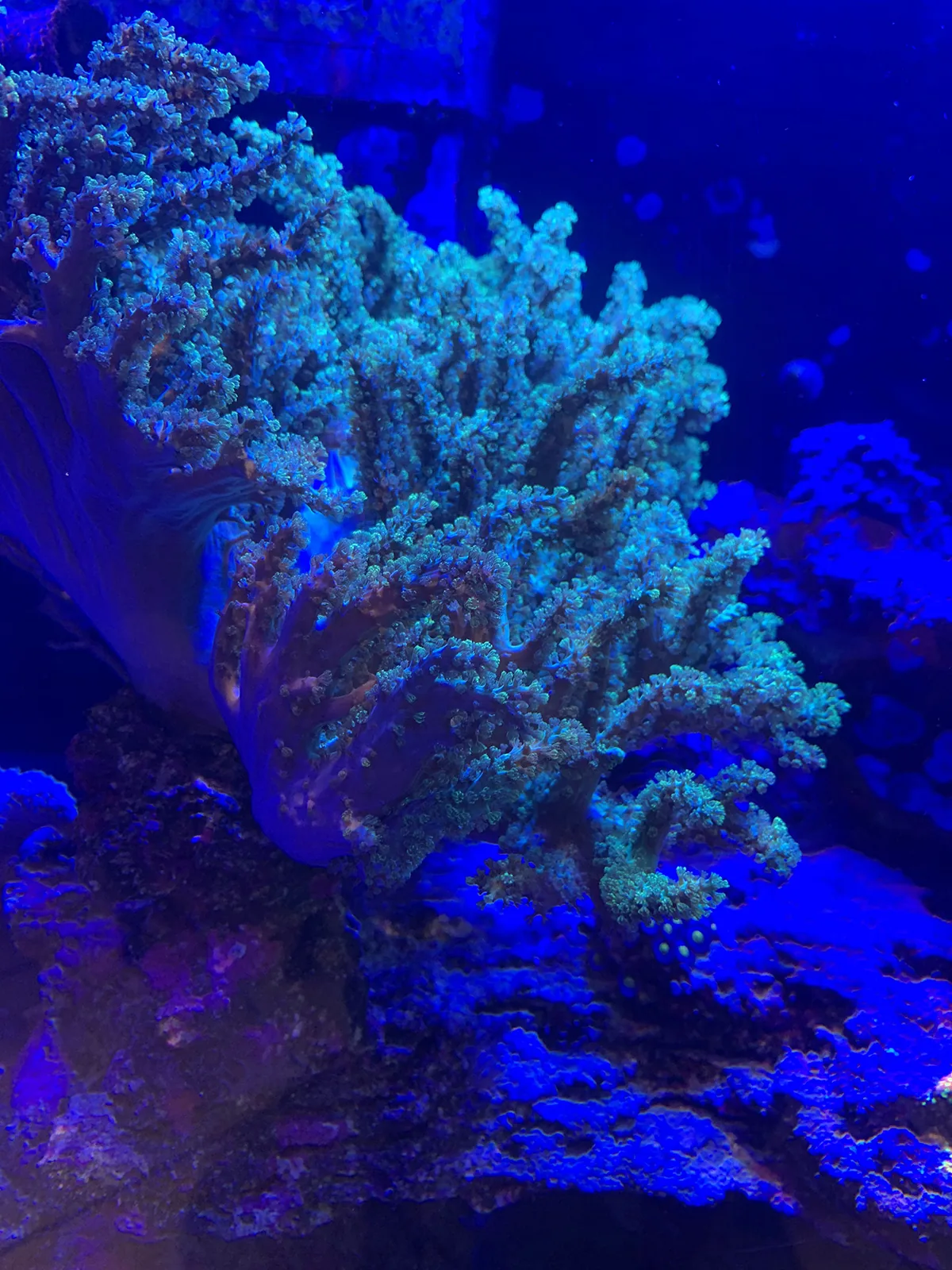

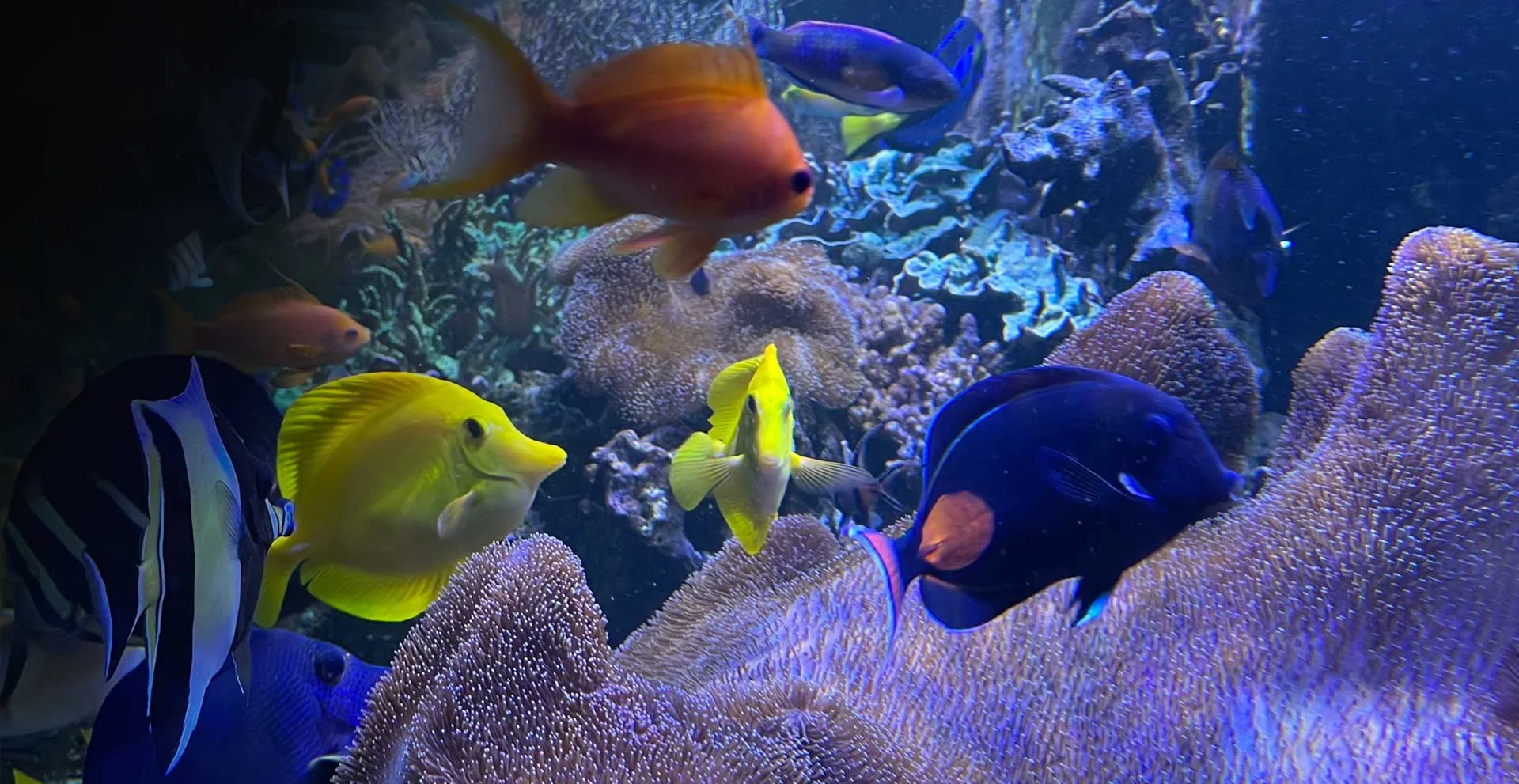
A custom aquarium can transform a living room, office, restaurant, showroom, or other commercial space into an environment people remember. Unlike an aquarium purchased from a store, however, a custom-built system must be designed around the available space, structural support, water source, electrical capacity, intended livestock, and long-term maintenance requirements.
Planning these details before fabrication begins can help prevent unexpected costs, installation delays, and maintenance difficulties. Here are ten important things to consider before installing a custom aquarium in your New Jersey home or business.
1. Consider the Aquarium’s Total Weight
Weight should be one of the first considerations when planning a custom aquarium.
A gallon of water weighs approximately 8.34 pounds. This means that the water alone in a 200-gallon aquarium weighs approximately 1,668 pounds. Once the aquarium, cabinet, filtration equipment, substrate, rocks, decorations, and other components are included, the complete system can weigh considerably more.
The aquarium’s location must therefore be evaluated to determine whether the supporting structure is suitable for the anticipated load. Larger installations or aquariums placed on an upper floor may require an assessment by an appropriately qualified structural professional.
JK-Fish’s process includes a detailed inspection of the proposed location, including its structural weight, plumbing, and electrical requirements.
Questions to address during the planning stage include:
- What will the completed aquarium system weigh?
- Where will that weight be distributed?
- Is the aquarium being installed on a concrete slab or framed floor?
- Will structural reinforcement be necessary?
- Is the proposed location accessible for delivery and installation?
These questions should be resolved before the aquarium’s final dimensions are approved.
2. Test the Available Water Source
Water conditions can vary between municipalities, buildings, private wells, and public water systems. The source water’s pH, mineral content, hardness, disinfectant treatment, and other characteristics may affect how it should be filtered or conditioned before being used in an aquarium.
Community water suppliers provide annual Consumer Confidence Reports containing information about local drinking-water sources and detected substances. Although these reports are intended primarily for drinking-water transparency, they can provide useful background information about the property’s water supply.
The source water should also be tested specifically for the planned aquarium. The appropriate preparation will depend on whether the system is freshwater, saltwater, planted, fish-only, or reef-based.
Testing the water before the aquarium is installed can help determine:
- Whether reverse-osmosis water is appropriate
- What type of water conditioning may be needed
- Which filtration system should be considered
- How the aquarium’s water parameters will be established
- What maintenance procedures will be required
JK-Fish provides aquarium maintenance, consulting, health checks, and RO-filtered water services for freshwater and saltwater aquariums.
3. Determine Whether Permits Are Required
Not every aquarium installation requires a construction permit. However, permits may be required when a project involves structural alterations, plumbing, electrical work, mechanical work, wall modifications, or other changes to the building.
New Jersey’s Uniform Construction Code generally requires permits for new construction and for structural, plumbing, mechanical, and electrical work on existing buildings. Some routine maintenance and minor repairs may be exempt.
Requirements and application procedures are administered through local construction offices, and the exact requirements may depend on the scope and location of the project. Each municipality may also follow a slightly different administrative process.
Before work begins, confirm:
- Whether structural work is required
- Whether new plumbing will be installed
- Whether new electrical circuits or outlets are needed
- Whether walls, floors, ceilings, or cabinetry will be modified
- Who will determine the applicable permit requirements
- Who will prepare and submit the necessary applications
- Whether additional licensed professionals will be involved
The contract should clearly state which party is responsible for permit applications, inspections, and related work.
4. Choose the Aquarium’s Location Carefully
An aquarium’s location affects its appearance, accessibility, temperature stability, electrical requirements, and long-term maintenance.
Direct sunlight can contribute to unwanted algae growth and may make the aquarium’s temperature more difficult to control. Heating and cooling vents can also create temperature fluctuations or increase evaporation.
The location should provide sufficient access for:
- Installing and servicing filtration equipment
- Cleaning the aquarium glass
- Performing water changes
- Replacing pumps, lights, and other components
- Feeding and observing the livestock
- Reaching valves, plumbing connections, and electrical controls
- Removing or replacing equipment in the future
The aquarium should also be positioned near an appropriate water source, drainage option, and electrical supply whenever possible. However, equipment access should not be sacrificed simply to place the aquarium close to an existing outlet or plumbing connection.
During its consultation and inspection process, JK-Fish considers the proposed design, ecosystem, aquarium location, available space, plumbing, electrical requirements, and structural weight.
5. Evaluate the Electrical Requirements
A custom aquarium may include pumps, heaters, lighting, filtration equipment, controllers, protein skimmers, chillers, automatic top-off systems, and other electrical components.
Some equipment may operate continuously, while other components switch on and off throughout the day. The total electrical demand should therefore be evaluated during the planning stage.
Important considerations include:
- The number and location of available outlets
- Whether the existing circuit has sufficient capacity
- Whether dedicated circuits are recommended
- Protection from water exposure
- Safe cable and power-strip placement
- Backup plans for power interruptions
- Access to equipment controls
- Local electrical-code requirements
If the project requires new outlets, circuits, wiring, or panel modifications, the work should be evaluated and completed by an appropriately qualified electrical professional. Applicable permits and inspections may also be required.
Electrical planning should take place before the aquarium is delivered, not after the system has been installed.
6. Custom Aquariums Require Custom Planning
One of the main advantages of a custom aquarium is that it can be designed around the room rather than forcing the room to accommodate a standard aquarium.
Depending on the property and design objectives, a custom aquarium may be:
- Installed within a wall
- Positioned between two rooms
- Incorporated into custom cabinetry
- Designed as a freestanding centerpiece
- Built behind a reception desk or bar
- Shaped to fit a corner or architectural feature
- Created as a large statement aquarium for a commercial space
Custom dimensions also affect the aquarium’s materials, thickness, supporting cabinet, filtration capacity, plumbing design, lighting, and installation method.
JK-Fish states that its custom aquarium services include tank fabrication, biological logistics, financial planning, architectural design, aquarium cabinetry, livestock selection, and installation. Its aquariums can be constructed in the shape and size needed for the available space.
Because each project is different, ask for a project-specific schedule covering:
- Initial consultation
- Site inspection
- Design development
- Proposal approval
- Tank and cabinet fabrication
- Site preparation
- Delivery
- Installation
- System preparation
- Livestock introduction
Avoid assuming that every custom aquarium will follow the same timeline.
7. Choose the Ecosystem Before Finalizing the Design
Freshwater, saltwater, planted, fish-only, and reef aquariums have different design and maintenance requirements.
The intended ecosystem can influence:
- Tank dimensions
- Filtration equipment
- Water movement
- Lighting
- Temperature control
- Substrate
- Rockwork and aquascaping
- Water preparation
- Livestock compatibility
- Maintenance frequency
- Installation and operating costs
A reef aquarium, for example, may require lighting and water movement selected for the planned coral species. A planted freshwater aquarium may require lighting, substrate, nutrients, and carbon-dioxide management based on the plants being used.
The aquarium should not be designed first and assigned an ecosystem later. Decide what type of aquatic environment you want during the consultation stage so the system can be designed appropriately.
JK-Fish designs and installs custom freshwater and saltwater aquariums and provides guidance throughout the design, construction, and installation process.
8. Include Maintenance in the Budget
A custom aquarium is not a “set it and forget it” installation. Even a professionally designed system requires regular observation, cleaning, water testing, and equipment maintenance.
Depending on the aquarium, ongoing care may include:
- Partial water changes
- Glass cleaning
- Algae management
- Filter servicing
- Water-parameter testing
- Equipment inspections
- Pump and plumbing checks
- Livestock health checks
- Coral or plant care
- Feeding-plan adjustments
- Replacing filtration media
- Cleaning accessories and fittings
The amount of work will depend on the aquarium’s size, ecosystem, stocking level, equipment, and design.
Some owners prefer to manage routine care themselves. Others use a professional maintenance service, particularly for large aquariums, reef systems, commercial properties, restaurants, offices, and other locations where staff may not have the time or training to manage the aquarium.
JK-Fish provides custom maintenance programs, cleaning, equipment servicing, freshwater and saltwater maintenance, health checks, consulting, and other aquarium-care services.
Ask for estimated ongoing expenses before approving the project so that maintenance is included in the total ownership budget.
9. Get a Detailed Scope of Work
A custom aquarium proposal should clearly explain what is included in the quoted price.
Depending on the project, the scope may include:
- Aquarium design
- Tank fabrication
- Custom cabinetry or stands
- Architectural coordination
- Plumbing
- Filtration
- Lighting
- Heating or cooling
- Electrical preparation
- Structural reinforcement
- Delivery
- Installation
- Aquascaping
- Water preparation
- Livestock
- Initial maintenance
- Ongoing service plans
The agreement should also identify which work will be completed by the aquarium company and which services may require an electrician, plumber, structural professional, contractor, architect, or other specialist.
Before signing the agreement, confirm:
- The final aquarium dimensions
- The materials being used
- The included equipment
- The warranty terms
- The estimated project schedule
- The payment schedule
- The responsibilities of each party
- Whether permits and professional fees are included
- Whether livestock is included
- Whether maintenance is included
- What happens if site conditions require additional work
A clear scope of work helps set realistic expectations and reduces the chance of disagreements later.
10. Plan Livestock Selection and Introduction Carefully
Fish, coral, plants, and invertebrates should be selected according to the aquarium’s size, filtration, water conditions, intended ecosystem, and compatibility requirements.
The appropriate stocking timeline may differ depending on how the system is designed and prepared. Livestock should be introduced according to the installer’s recommendations and only after the aquarium is ready to support the selected species.
The planning process should address:
- Adult fish size
- Territorial behavior
- Compatibility between species
- Schooling or grouping requirements
- Feeding requirements
- Coral-placement needs
- Lighting and water-flow requirements
- Temperature and water parameters
- Acclimation procedures
- The aquarium’s biological capacity
Choosing livestock only for appearance can lead to overcrowding, aggression, unsuitable water conditions, or feeding difficulties. Livestock planning should therefore be treated as part of the aquarium design rather than as a last-minute purchase.
JK-Fish includes livestock selection and biological planning among its custom aquarium services and guides clients through the project from concept and design to construction and installation.
Thinking About a Custom Aquarium for Your New Jersey Home or Business?
A successful custom aquarium begins with careful planning. Structural support, plumbing, electrical capacity, aquarium dimensions, water preparation, ecosystem design, livestock, accessibility, and long-term maintenance should all be considered before construction begins.
JK-Fish designs, builds, installs, and maintains custom high-end freshwater and saltwater aquariums for residential and commercial clients throughout the tri-state area. Its process includes consultation, site inspection, custom construction, professional installation, and ongoing aquarium care.
Contact JK-Fish to discuss a custom aquarium designed for your home, office, restaurant, showroom, or commercial space — call or text (973) 919-9199, email info@jkfishworld.com, or visit us at 1152 State Highway 10, Unit 5, Randolph, NJ 07869. You can also browse livestock and dry goods at our online store.