
The first few months decide whether a saltwater aquarium thrives. Most early losses come down to choosing fish that aren’t ready for a young tank, adding too many too soon, or letting water conditions swing. And just as things settle, many new reef keepers spot their first aiptasia, a pest anemone that rides in on live rock and coral.
Our team filmed two short videos with LiveTrained on both subjects, presented by Kieran from the JK-Fish team. This guide expands on them with the advice we give customers who are starting out.
The Best Beginner Saltwater Fish
A new tank is still maturing, and its water chemistry swings more than an established system’s. Your first fish should be forgiving: hardy, peaceful species that accept prepared foods.
Video: Kieran on choosing the first fish for a saltwater tank. Watch on Instagram
| Fish | Why it’s a good first fish | Good to know |
|---|---|---|
| Clownfish (ocellaris and percula) | Hardy, captive-bred, and full of personality | They don’t need an anemone. Most home tanks have room for one pair. |
| Royal gramma | Colorful, peaceful, and stays small | Likes a cave or overhang to call home. |
| Banggai cardinalfish | Calm and widely captive-bred | Keep alone or as a pair, since adults can squabble. |
| Green chromis | Active schooling fish | Groups need swimming room and often shrink through bullying, so add them together in a larger tank. |
| Damselfish (yellowtail, Kupang, four-stripe) | Tough, inexpensive, and colorful | Yellowtails are among the least aggressive damsels but can still become territorial. Four-stripes get aggressive as adults, so they suit larger tanks. |
| Blennies and gobies | Small, hardy, and full of character | Tailspot blennies and yellow watchman gobies are good first picks. |
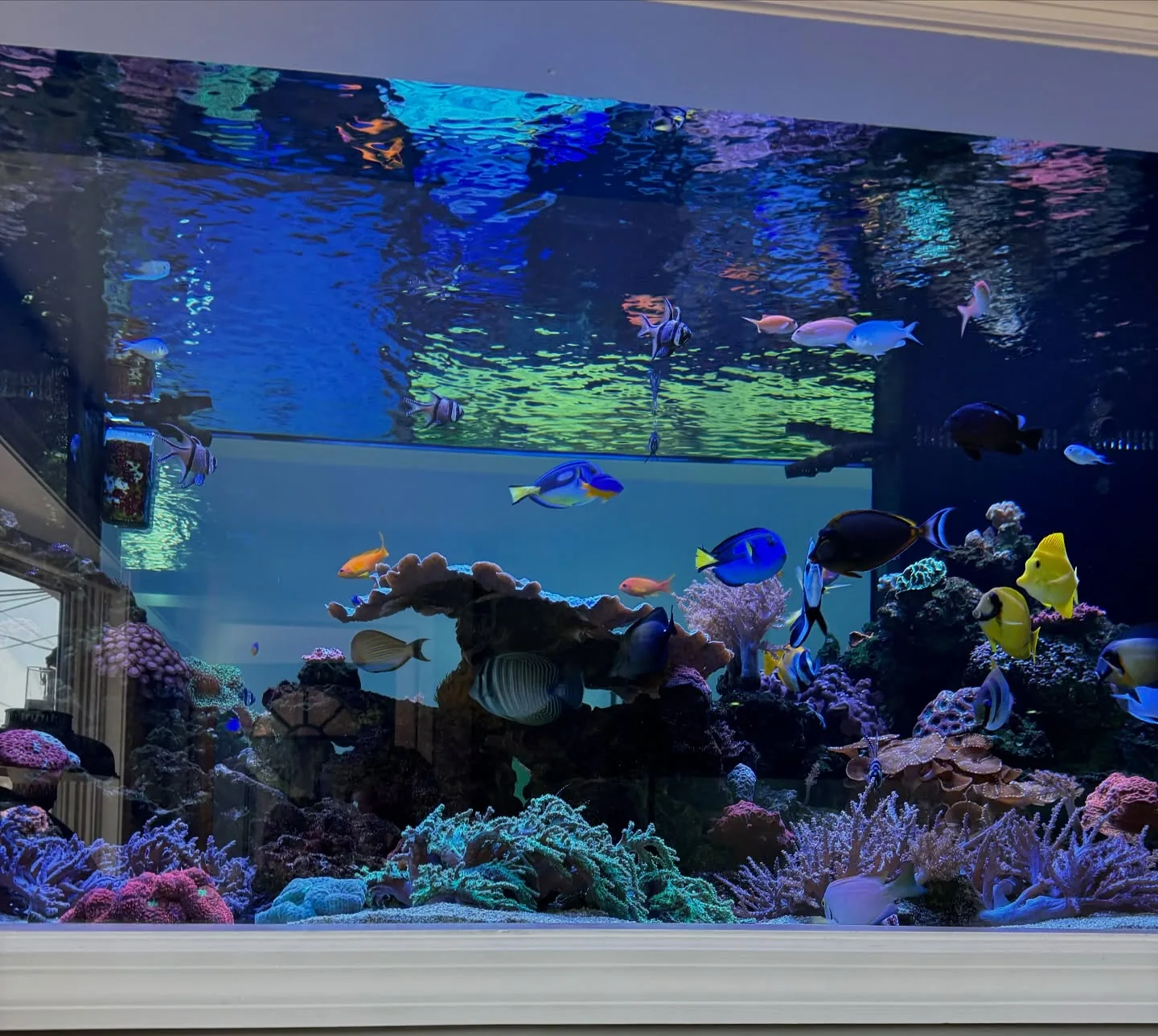
The tank in Kieran’s video holds all of these fish. For your own tank, choose a few species that suit its size and filtration and get along with each other, and check each one’s adult size. Save tangs, mandarin dragonets, larger angelfish and anemones until your tank has been stable for several months.
How to Add Fish to a New Tank
- Finish the cycle first. Ammonia and nitrite should both read zero before any fish go in. Nitrate will appear as the tank cycles, but nitrate alone doesn’t prove the cycle is finished. This usually takes several weeks.
- Add a few fish at a time, a couple of weeks apart. Peaceful fish go in first and territorial ones, like damsels, go in last.
- Keep conditions steady. Aim for a salinity of 1.025 to 1.026, a temperature of 76 to 78°F, and a pH of 8.0 to 8.4. Top off evaporation with fresh RO/DI water, not saltwater.
- Quarantine new fish when you can, so you can watch them for disease before they join your display.
- Feed lightly. Leftover food fuels algae and helps pests like aiptasia spread.
Aiptasia and Majanos: The Weeds of the Reef Tank
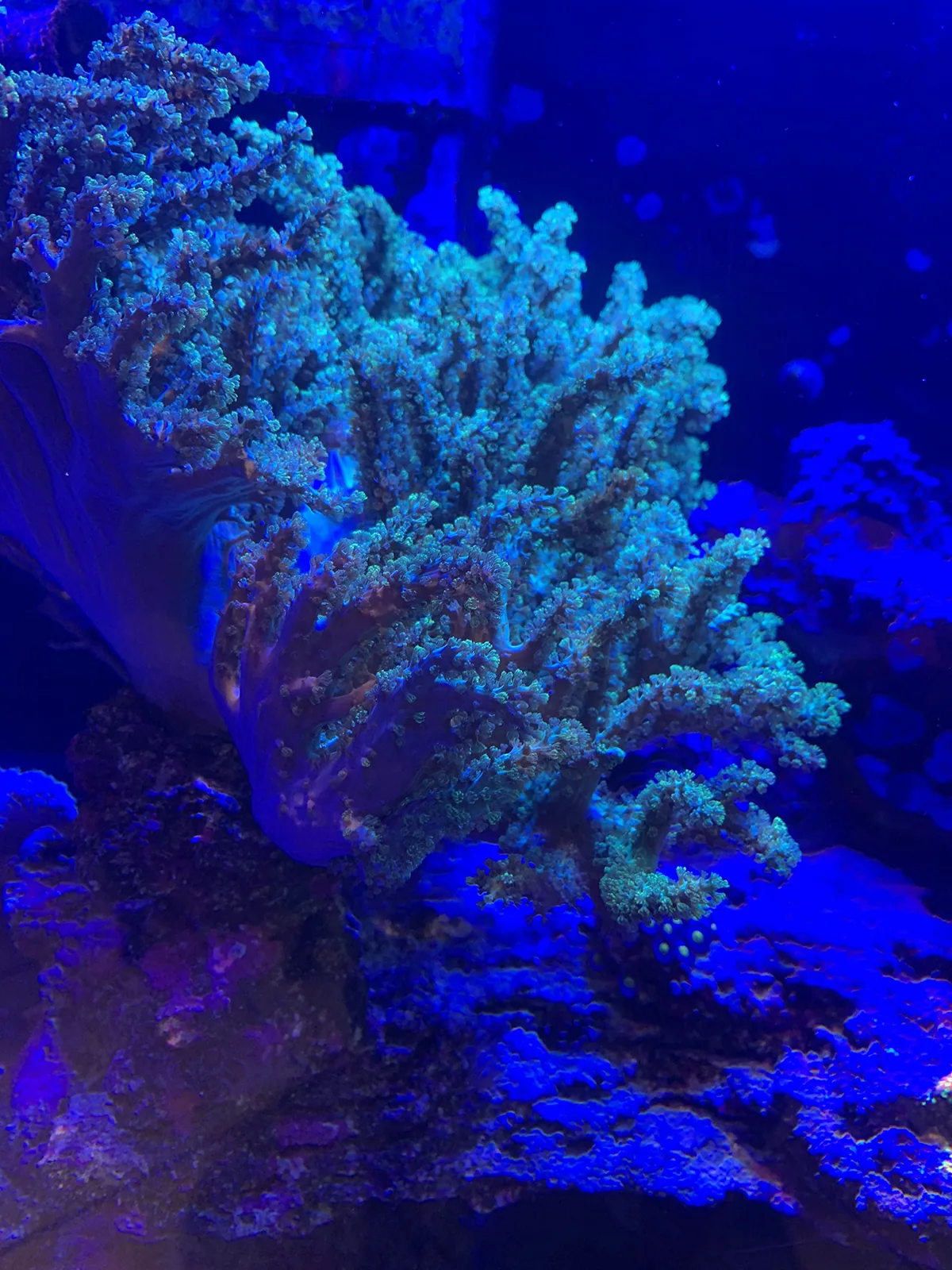
Aiptasia (glass anemones) and majano anemones are pest anemones that hitchhike in on live rock and coral frags. Aiptasia are translucent tan or brown with long, thin tentacles. Majanos are smaller and often green, with short, round-tipped tentacles. Their appearance varies, so be sure what you’re looking at before you treat it.
Both sting nearby corals, compete with them for space and light, and multiply quickly. Aiptasia can regrow from tiny scraps of tissue, so scraping one off usually makes things worse. By the time you spot a few, there are often many more hidden in the rockwork.
The best defense is prevention. Inspect every rock and coral before it goes in, and if a pest is sitting on a frag plug, move the coral to a new plug.
How to Get Rid of Aiptasia and Majanos
Spot treatment
For a handful of visible anemones, spot treatment is quick and inexpensive. At JK-Fish, we inject lemon juice with a needle, through the anemone’s mouth and down to its base, where it holds onto the rock. Turn your pumps off first, and make sure they come back on afterward. Approach slowly, because aiptasia retract in a split second, and check back after a few days for any you missed.
On our 1,000-gallon system, the small amount we use has no noticeable effect on pH. In a smaller tank it can lower pH, so use a commercial aiptasia treatment as directed, or one of the predators below.
Video: Kieran on controlling aiptasia and majanos. Watch on Instagram
Natural predators
- Peppermint shrimp are a popular reef-safe option for aiptasia. Make sure you get a true peppermint shrimp, not a camel shrimp, which eats corals. They rarely eat majanos.
- Berghia nudibranchs eat only aiptasia and leave corals alone, but peppermint shrimp and wrasses will eat them.
- Aiptasia-eating filefish eat both aiptasia and majanos, though some nip at zoanthids and soft corals.
- Copperband butterflyfish suit established reef tanks of 75 gallons or more. Some nip at fleshy corals, clams and feather dusters, they can be picky eaters, and not every one eats aiptasia.
- Heniochus butterflyfish may eat aiptasia, but results vary by species and individual. They need a large tank and may nip at corals.
Heavy infestations: a separate treatment tank
For badly infested rock, we use a second, cycled aquarium that has never held copper. Live rock absorbs copper and can release it into your reef later. Move the rock into the treatment tank with a raccoon, auriga or saddled butterflyfish. These fish aren’t reef-safe, but many readily eat aiptasia and majanos, though results vary between individuals.
Quarantine the butterflyfish before it goes into the treatment tank. Rock can still pick up parasites if the fish gets sick, so if you see signs of disease, keep the rock out of your display and ask us about a safe fallow period first. These fish also grow to 8 inches or more, so plan a long-term home for them. Once the rock is clean, it can go back into your display.
Learn More on LiveTrained
To go further, our two beginner courses, JK Fish: Taking Care Of Your Aquarium and JK Fish: Salt Water Aquarium, are available in LiveTrained’s Hobbies & Interests category.
Need Help with Your Saltwater Aquarium?
Whether you’re planning your first saltwater tank or fighting pests in an established reef, our team can help with stocking advice, livestock, and ongoing maintenance. Call or text (973) 919-9199, email info@jkfishworld.com, or request a quote online. You can also visit us at 1152 State Highway 10, Unit 5, Randolph, NJ 07869, or browse livestock and dry goods at our online store.